
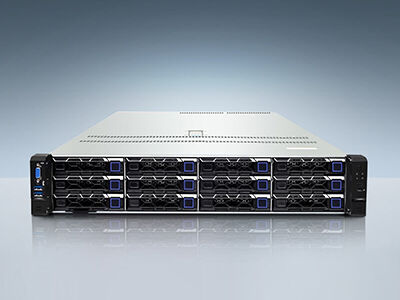
During a fast-paced digital transformation period, enterprises are always in need of an infrastructure that is balanced in terms of performance, scalability, and efficiency. Though new models of computers are appearing rack servers are still the undisputed foundation of the contemporary data centers.
Unmatched Space Efficiency and Scalability
Rack servers are designed with high density deployment with heights that are based on the 19-inch industry standard. Such standardization enables organizations to harness the greatest computing power per square meter. This density is essential in businesses with finite data center real estate that have to accommodate business expansion. Scaling is also made easy by the modularity of the rack servers more units can be added to the existing rack without necessarily changing out infrastructure to allow scalability to accommodate the changing demands.
Simplified Management and Maintenance
The rack server deployments are characterized by centralized management. The IT teams will be able to synchronize and upgrade and get help with various systems by consolidating servers in the unified cabinets. Remote management devices (e.g. IPMI) also minimize manual intervention permitting on-site hardware diagnostics and maintenance. This is a lean methodology that reduces operational expenses and downtime- high a crucial consideration to industries such as finance and manufacturing whose service delivery cannot be compromised.
Adaptability to Diverse Workloads
The rack server is characterized by versatility. The configurations go as small as 1U nodes to support lightweight cloud services and 4U nodes with large storage and GPU slots to support a data-intensive workload such as video analytics or AI model training. An illustration is a 2U server, which balances performance and storage disk capacity, which should be deployed in a database, whereas a 4U server supports a high-core count processor and immense memory allocation, which is appropriate in a virtualization or big data load. This is allowing rack servers to be optimized to fit to particular use cases without affecting performance.
Energy Efficiency and Cooling Innovations
The current rack servers are more sustainable because of enhanced thermal management systems. The designs are optimized airflow systems, and redundant cooling fans and liquid cooling kits are supported to support high-TDP processors. These features help reduce energy wastage and overheating thereby supporting trends worldwide towards greener IT processes. Organizations that are keen on minimizing their carbon footprints but will do so without minimizing computational intensity will find such innovations particularly useful.
Reliability for Mission-Critical Applications
Rack servers provide the high-availability and reliability that enterprises need. Having the attributes of dual power supply, RAID configuration, and hot-swapped parts, they guarantee an almost continuous operation even in case of a crash of other hardware. Disaster recovery setups cannot do without this reliability where speedy failover and integrity of data are of utmost importance. Rack servers are used in industries such as energy or finance that have serious consequences of system failure that can be utilized to protect operations.
Conclusion
Rack servers still drive the market of data centers by being experts at the basics of space maximization, complexity reduction, and adjusting to changes in technology. Their standardised but customisable nature makes them a sensible option to businesses that are manoeuvring the requirements of AI, edge computing and sustainability. The rack server has proven to be a scalable, efficient and reliable platform to host infrastructure, as it has always been, and it is unlikely to go away soon; this is how the simplest solutions can be the most lasting.