

Our business at Aethlumis is to make industries smart. We also experience, through our collaboration with such leaders as HPE, Dell, and Huawei, the technological requirements of the present-day AI research. With organizations in finance, manufacturing, and energy driving the limits of possible to create proprietary large language models, simulate complex physical systems, they all have a common problem: scaling research capacity both efficiently and sustainably. Here the change in architecture to OAM (Open Accelerator Module) GPU servers would not only be beneficial, but also necessary.
Breaking the density barrier to serial research.
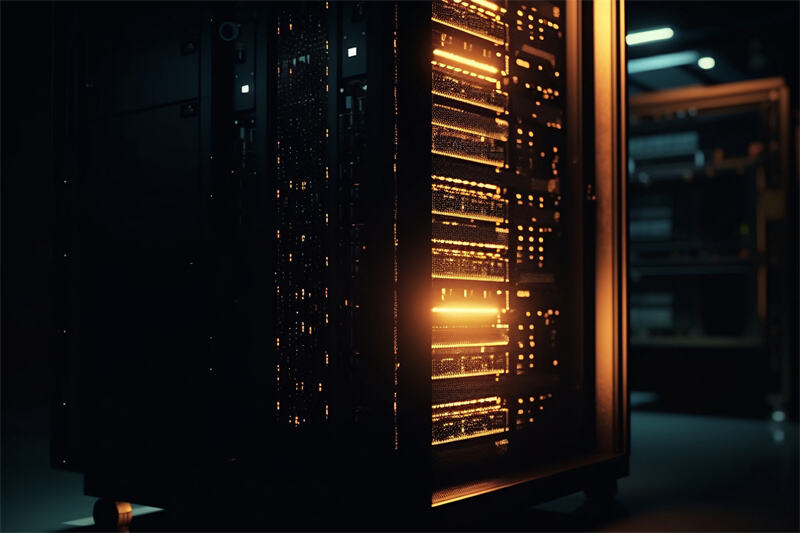
The research of AI is an iterative process. Advancement requires the capacity to conduct not limited experiments, prepare larger models, and work with large volumes of data at once. The older server designs, the ones capable of only having a few GPUs in a chassis, cause a physical sprawl that is expensive and inefficient. This density barrier is broken by OAM servers. They reduce the size of the computational footprint significantly by fitting eight, sixteen or more GPUs in a single system node. In the case of a research team, this is either running multiple experiments at the same time or much faster individual training jobs. It is the direct interpretation of quicker iteration cycles, allowing researchers to test hypothesis and perfect models days rather than weeks, an invaluable advantage in high-paced domains.
Modularity: Infrastructure-Project Pipelines Congruency.
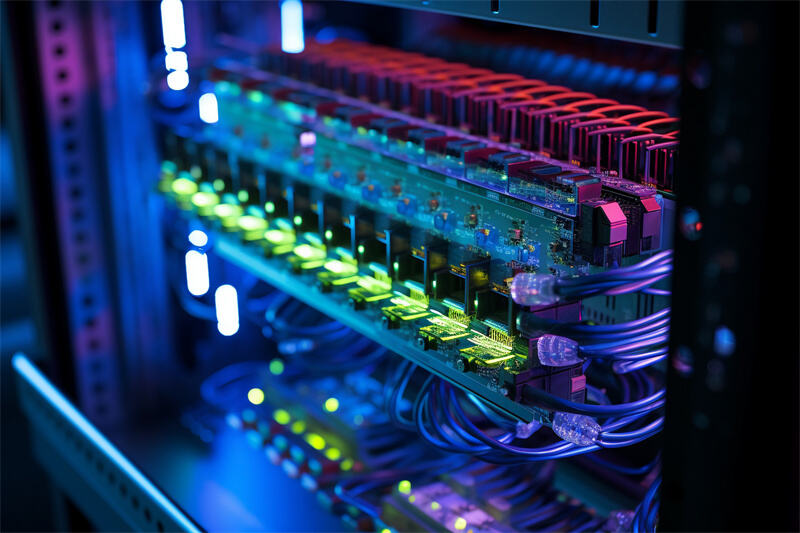
The needs of research do not remain constant. A team might have to switch projects rapidly, such as a computer vision project, a genomics analysis and an NLP exploration. Fixed-configuration systems that are traditional in nature may cause fragmentation or bottleneck in resources. The operational flexibility of OAM-based servers has never been experienced before because it is modular. The computing resources may be shared and dynamically distributed. The quant research team at a bank is able to allocate resources to a time-bound risk modeling project and afterwards reassign those identical modules of OAM to a fraud detection AI project on a seamless basis. This flexibility, which is handled by the advanced integration, means that costly hardware is used to the fullest extent, and the infrastructure matches the requirements of the research pipeline, as they change.

Open Ecosystem Future-Proofing.
The decision to take a multi-year research roadmap of using proprietary and closed hardware stack is a risk. Technology changes very fast and vendor lock in may drown innovation and exorbitant expenses. The open standard which is the core of the OAM architecture is a strategic protection. It creates a competitive multi-vendor accelerator, host system ecosystem. To our customers, this implies the ability to select the components of the best-in-class and the ability to add, to their already existing infrastructure, future generations of GPUs or purpose-designed AI accelerators produced by other vendors. This open model with the backing of the platforms of our partners safeguards long-term research investments and makes the latest innovations available so that research capacity is kept at the forefront.

Empowering Impactful and Lasting Research.
Last but not least, scaling research does not simply relate to raw power but also allows collaboration and total cost of ownership. The high-density structure of OAMs, which is consolidated, can be used to create shared and central AI research clusters. Various groups within a manufacturing company, such as autonomous robotics, predictive maintenance, and optimization of the supply chain, can have a single powerful pool of resources in place safely. Furthermore, the high-density systems include advanced cooling systems (such as liquid cooling), which are not optional but necessary to achieve stability and sustainability. Their operational costs are lower because of their drastic efficiency in the use of energy over air-cooled racks and it conforms to the green tech ideals that increasingly matters in forward-thinking research institutions.
Simply stated, OAM GPU servers signify the next step of development of singular units of computation to a scalable, versatile, and open research tool. They give the underlying system upon which the capacity of AI research can expand continuously with ambition. At Aethlumis, we bundle this great hardware with our high level of systems integration and solid technical support to provide these indispensable platforms. Our clients are guaranteed to have the efficient, secure and scalable infrastructure required to make the next breakthroughs in their respective fields.